From research to care delivery - leverage AI and data to improve patient health and accelerate discovery
Enhancing healthcare and lifesciences sector with tech-driven innovation
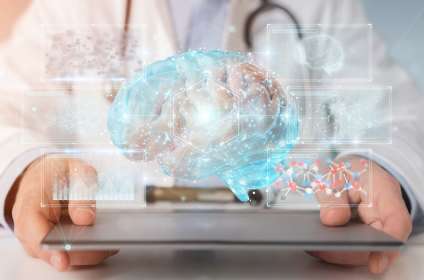
Forecast patient outcomes and disease progression with increased accuracy through AI algorithms that enable proactive care and personalized treatment plans seamlessly.

Enhance diagnostic accuracy drastically by analyzing medical imagery like X-rays, MRIs, and CT scans to enable early detection of symptoms and pro-active treatment of patients.

Accelerate drug development through an AI-first approach by identifying potential drug candidates, predicting efficacy, and optimizing compounds to reduce time-to-market.

Switch to AI-driven chatbots that provide 24/7 patient support, answer queries, and schedule appointments, improving patient engagement and reducing workloads.

Streamline your EHR management efficacy by automating data entry, insights extraction, and identifying patterns to enhance clinical decision-making.

Analyze data from wearable devices to monitor chronic conditions, alert caregivers to anomalies, and enable timely interventions to improve patient outcomes and enhance patient care.
Get the right enterprise solutions with our extended partner ecosystem







See what we are working on
AI is used in healthcare to support clinical decision-making, predict patient risk, automate repetitive workflows, and make medical and administrative data easier to analyze. It can also help with patient engagement, medical text processing, and claims workflows. For healthcare providers, AI is most valuable when it is built on trusted data, integrated into real workflows, and designed with security and compliance in mind.
Healthcare digital transformation often depends on a combination of interoperable systems along with secure cloud infrastructure, modern applications, and reliable data platforms. The healthcare use cases that are dominating this space include EHR and EMR integration, integrating FHIR and HL7 standards, secure APIs led clinical data pipelines that drive healthcare analytics, along with HIPAA-aligned cloud environments. These technologies help healthcare providers improve access to information, streamline operations, and support better patient and provider experiences.
Life sciences companies use data engineering to bring together data from clinical trials, research systems, commercial platforms, and external sources. A well-designed data foundation can improve data quality, simplify reporting, and prepare information for analytics, AI, and machine learning. For pharmaceutical, biotech, and life sciences, this can help accelerate research, improve regulatory readiness, and create more connected data environments across the product lifecycle.
Interoperability allows healthcare systems to exchange information securely and accurately. This is especially important when hospitals, labs, providers, payers, and healthtech platforms all rely on different tools and data formats. Standards such as FHIR, HL7, and secure APIs help make clinical and operational data more usable across systems. Better interoperability can improve care coordination, reduce administrative burden, and give care teams faster access to the information they need.

We are the preferred AI consultants for some of the biggest Fortune 100 companies, helping their tech match the pace of their business. Our comprehensive offerings in strategy, design, and engineering address complex digital transformations and technology adoption.